14 of 20 players
Finding the right people was harder than finding people.
Players struggled to find teammates with matching skill level, availability, and goals.

Case Study 2024
A platform connecting players, coaches, and teams in the North American Counter-Strike 2 competitive scene.
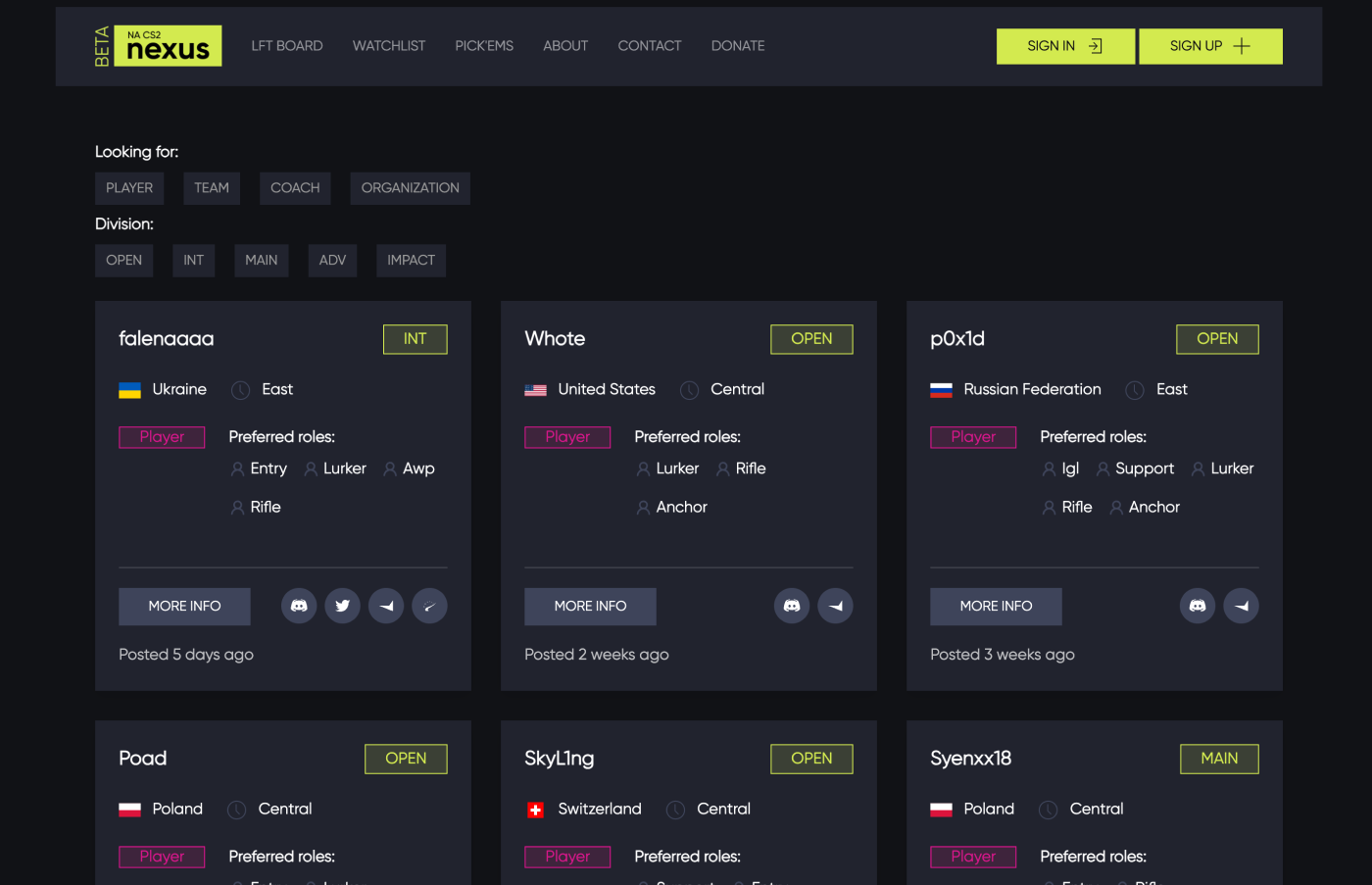
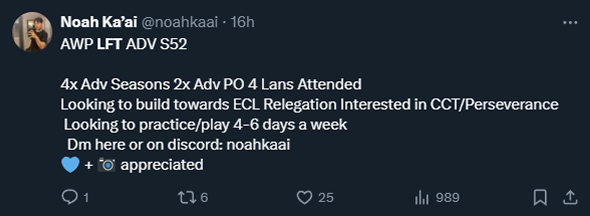
I played CS2 competitively in the North American scene and experienced the recruiting problem firsthand - no filters, no structure, just Twitter posts and Discord servers. Nothing on the market solved this. That became the brief.
The Challenge
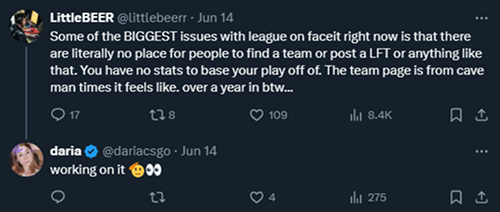
Platforms like FACEIT (the leading competitive matchmaking platform for CS2) help players compete. They don't help players connect.
Design a dedicated space for the North American competitive CS2 scene, where players, coaches, and teams can find each other based on skill, availability, and goals instead of scattered Discord servers and Twitter threads.
Research
I spoke with 20 players, 4 coaches, and 9 team captains to understand how they currently found teammates and where the process broke down.
14 of 20 players
Players struggled to find teammates with matching skill level, availability, and goals.
4 of 4 coaches
There was no structured way to showcase expertise and reach teams outside their personal network.
6 of 9 captains
Captains relied on personal recommendations due to a lack of better alternatives.
Community Validation
Goals
Match by skill, availability, and goals - not by who posted last.
Profiles should answer the key questions before anyone sends a message.
Evaluate, decide, connect - without back-and-forth.
Design decisions
This is where research became design.
Players named three recurring blockers: skill mismatch, timezone, and different competitive goals. Each became a visible field on every listing card - so users could assess compatibility before opening a profile.
I wanted listings detailed enough that no questions remained after reading one. But every extra field is friction. The solution was grouping fields logically so the form felt like a conversation, not paperwork.
Filtering by type and division scopes the results instantly. Select Player and Main - only matching listings appear. Each card reflects the active filters through color tags, so you can scan compatibility without opening a profile.
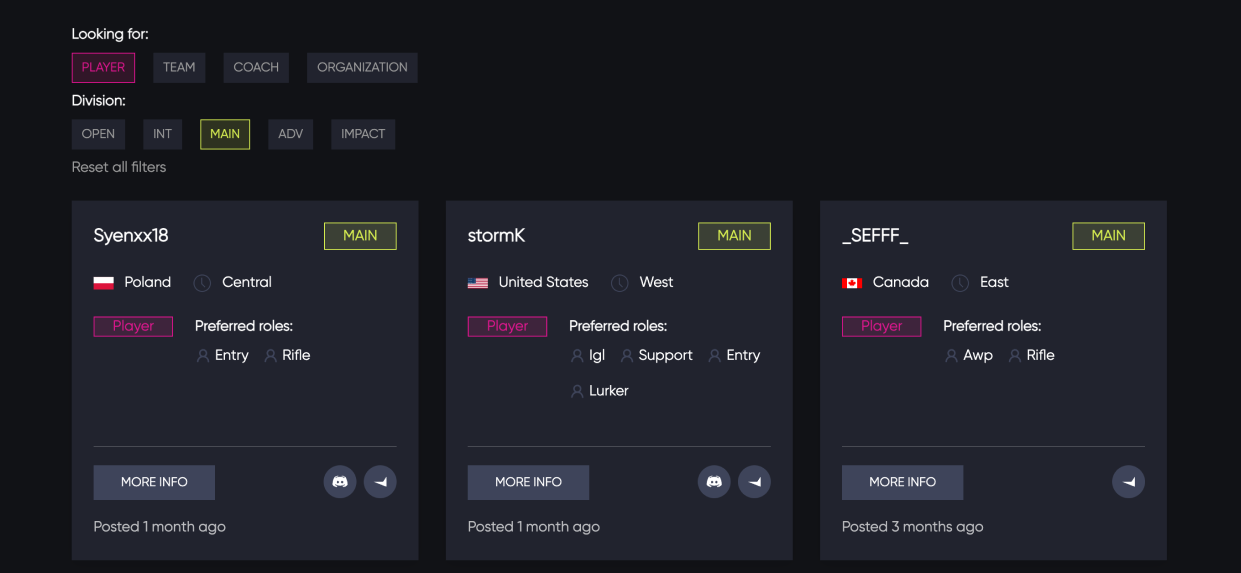
Each card surfaces what matters most - league, timezone, roles, and contact. Filter by type and division - only matching listings appear, reflected through color tags on each card.
Features
Filter by rank, role, region, timezone, league, and competitive goals.
Showcase achievements, roles, availability, and social links in one place.
Three months after launch, I identified a second problem worth solving - not about finding people, but about managing who you play with.
FACEIT shows your entire friends list with no way to focus. When you need a fifth player quickly, that's friction. Nexus lets you group teammates and see at a glance who's online or played recently.
FACEIT gives you five blocks. At high or low ELO the player pool is small and the same people keep appearing. The avoid list gives more control - a personal record of who to watch out for, with ban history surfaced alongside it.
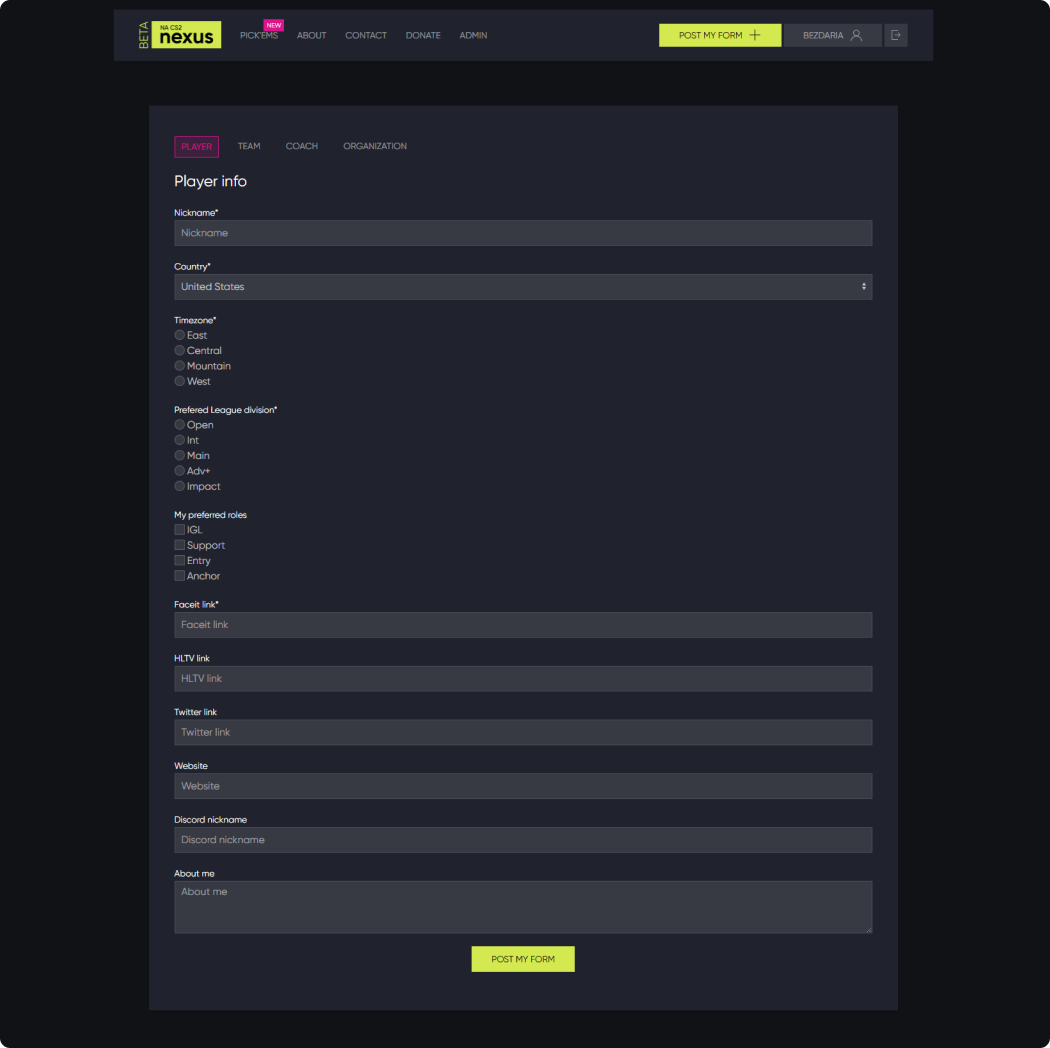
The form players, coaches, and teams fill out to post a listing.
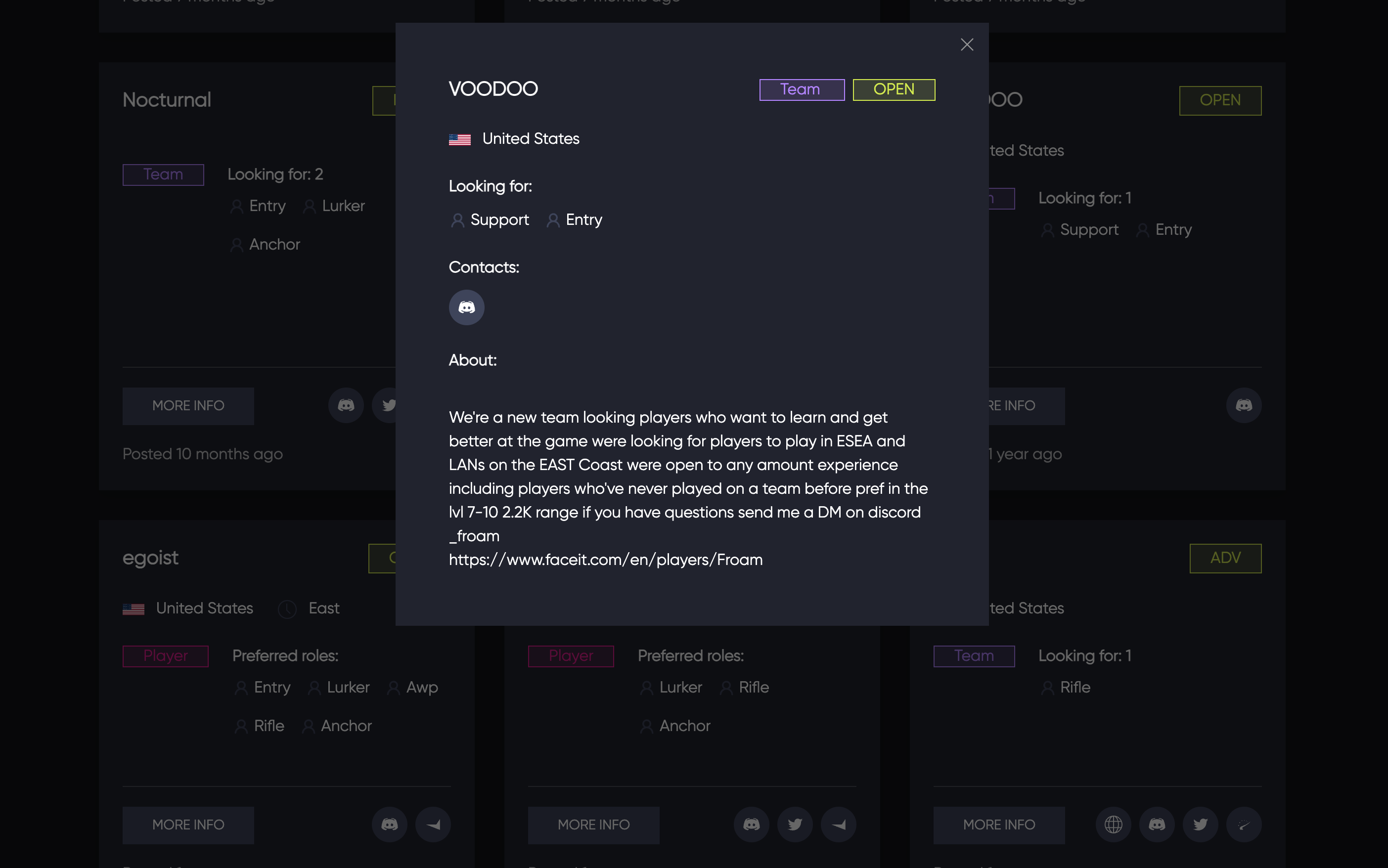
Every listing expands into a full profile - roles, contact links, and an open field for anything that doesn't fit a dropdown.
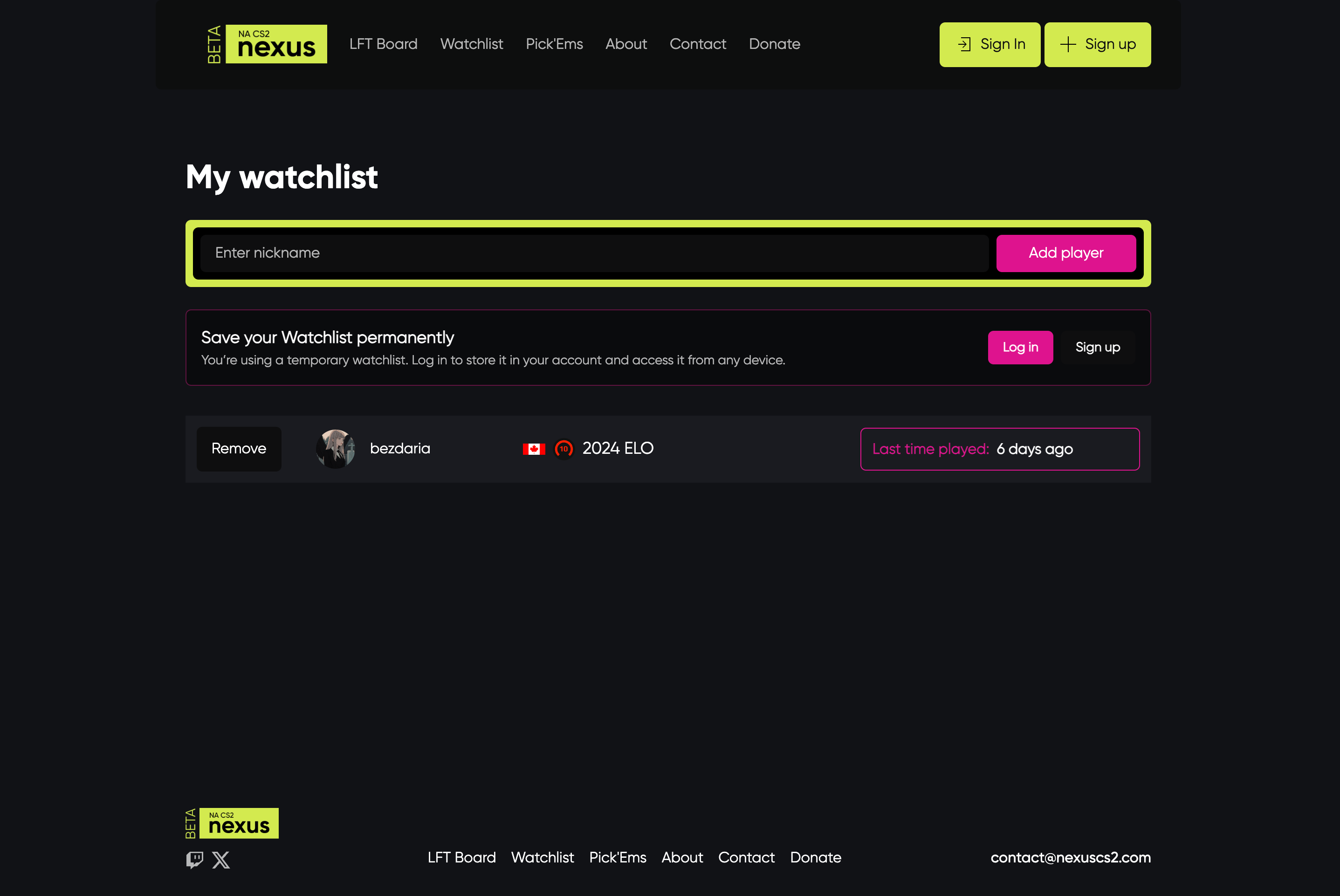
Watchlist and Avoid List work the same way - add a player, see when they last played.
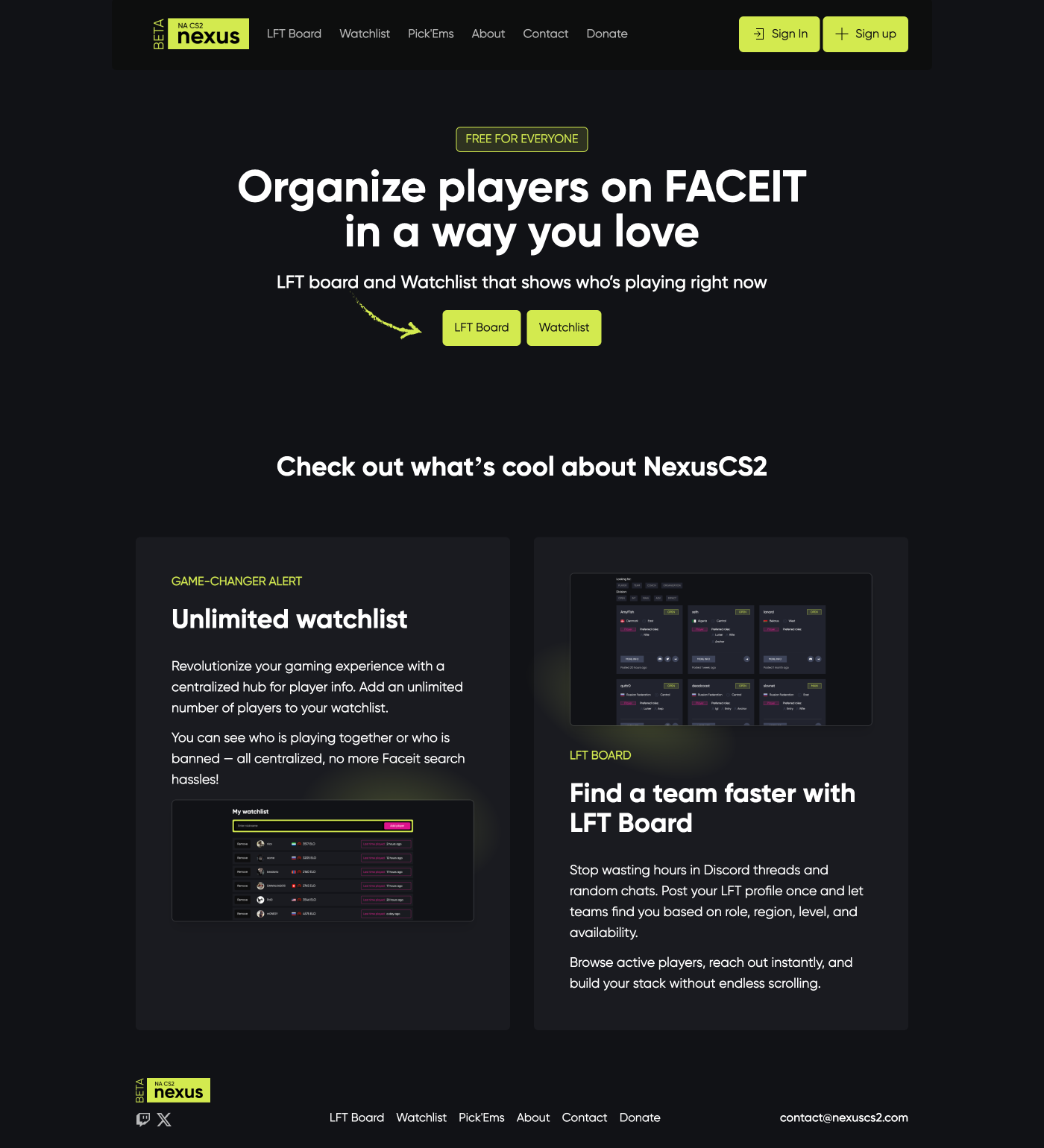
The first screen users see - what Nexus does and how to get started in two clicks.
Outcomes
100+
Users registered in the first week
14
LFT posts created on launch day
6
Players reached out personally to share they found a team or connected with one
Players reached out personally to share they found a team or connected with one.
Reflection
But research made it specific. Talking to players, coaches, and captains showed me that the same frustration looked different depending on who you were and what you needed.
The post-launch features followed the same logic. Not planned, not from a roadmap - just from noticing a gap that only became visible once the product was live.
Knowing that people are actually using Nexus to find teammates and build teams in the NA scene - that's what made this project worth doing.
More projects
If you want to keep exploring, these are two other projects I worked on.